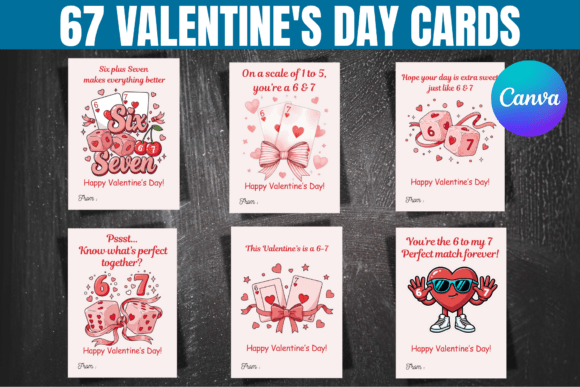
67 Valentine's Day Cards Template: Modern Tween & Teen Style
A Fresh Take on Classroom Valentine's Day Cards
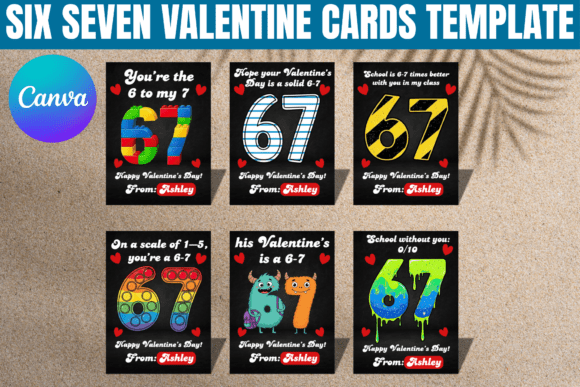
The annual classroom Valentine exchange doesn't have to mean the same generic store-bought cards year after year. For tweens and teens navigating that awkward space between childhood and young adulthood, finding cards that feel age-appropriate and genuinely cool can be a challenge. The 67 Valentine's Day Cards Template set steps into this gap with a modern, slang-driven approach that speaks directly to middle school and high school students.
These aren't your typical hearts-and-cupid designs. The "Six Seven" themed templates embrace contemporary language and humor that resonates with today's younger crowd. Think bold typography, trendy color palettes, and messaging that feels current rather than cringe-worthy. For parents, teachers, and anyone organizing school Valentine's parties, this collection offers a practical solution that kids will actually want to hand out.
What Makes These Templates Stand Out
The visual personality of these cards leans into clean, modern design principles. You'll find a mix of sans serif font choices paired with playful graphic elements—nothing overly childish, nothing too sophisticated. The layouts are intentionally simple, making them easy to read at a glance during classroom exchanges. Color schemes range from vibrant neons to more subdued pastels, giving you flexibility to match different preferences and printing capabilities.
What really sets this collection apart is the language. Cards feature phrases and references that align with how tweens and teens actually communicate. This isn't about pandering or trying too hard—it's about meeting kids where they are. The humor is lighthearted and inclusive, designed to make both the giver and receiver feel good about the exchange.
From a design assets perspective, having 67 variations means you're not stuck with a handful of repetitive options. Students can pick cards that reflect their personality, friend groups, or sense of humor. This variety also works well for classrooms where you need enough unique designs to keep things interesting across thirty-plus students.
How the Customization Process Works
The templates live in Canva, which means you need a Canva account to access them. If you've never used Canva before, the free version handles most of what you'll need here. The process is straightforward: open the provided link, and you're immediately working with an editable template.
Customization options include changing text, adjusting colors, swapping out design elements, and rearranging layouts. For a teacher organizing cards for an entire class, you might batch-edit the student names and print multiples. For individual students, they can personalize each card for different classmates. The flexibility matters because Valentine's exchanges are personal by nature—even when they're mandated by the school calendar.
One practical note worth mentioning: some design elements within the templates use Canva Pro features. If you're working with the free version, you'll need to substitute those specific images or graphics with alternatives. This isn't a dealbreaker—Canva's free library is extensive—but it's worth knowing before you dive in. New users can also take advantage of Canva's 30-day Pro trial if you want full access without immediately committing to a subscription.
Practical Applications Beyond the Classroom
While these templates are designed with school Valentine's exchanges as the primary use case, their applications extend further. Youth group leaders, after-school program coordinators, and community center organizers often need printable cards for events. The "Six Seven" theme works well for any setting where tweens and teens gather.
Small business owners running kid-focused businesses—think tutoring centers, dance studios, martial arts dojos—might use these templates as party favors or promotional items during February. It's a low-cost way to add value for families while keeping your brand top of mind during a holiday that dominates elementary and middle school culture.
The download formats matter here. Being able to save as PNG, JPG, PDF, or SVG gives you flexibility depending on your printing setup. PDFs work best for standard home or office printers. PNGs and JPGs are ideal if you're sending files to a print shop or uploading to an online printing service. SVGs come in handy if you're using cutting machines like Cricut or Silhouette for more elaborate card designs.
Design Considerations for Printing
When printing Valentine's cards at home, paper choice makes a noticeable difference. Standard copy paper works but feels flimsy. Cardstock in the 65-80 lb range gives cards a more substantial feel without being difficult to cut. If you're printing for an entire class, consider running a test sheet first to check color accuracy and text readability before committing to a full batch.
For those thinking about print design quality, the templates are formatted for standard card sizes that fit easily into typical Valentine's card envelopes or fold-over designs. The resolution is sufficient for crisp printing at home, though professional print shops will produce sharper results on higher-quality stock.
Why Modern Valentine's Cards Matter for This Age Group
There's a real developmental sweet spot here. Kids aged 10-16 care deeply about how they're perceived by peers, and handing out babyish Valentine's cards can feel genuinely embarrassing. The 67 Valentine's Day Cards Template set acknowledges this reality without overthinking it. The designs are age-appropriate, socially aware, and built around communication styles that feel authentic to the intended audience.
For the adults managing these exchanges—whether you're a parent helping with homework, a teacher organizing a class party, or a youth leader planning an event—having access to templates that kids won't resist using is surprisingly valuable. It removes one friction point from an activity that should be fun and straightforward.
The creative font choices and modern typography throughout the collection reflect current design trends without being so trendy that they'll feel dated by next February. That balance matters when you're investing time in customization and printing. You want cards that feel fresh now and still look reasonable if someone finds one stuffed in a backpack months later.
Ultimately, this template set solves a specific problem with practical design thinking. It meets a real need for a specific audience, offers genuine customization flexibility, and delivers results that look intentional rather than last-minute. For anyone responsible for Valentine's Day cards for the tween and teen crowd, it's worth exploring.