Blank Illustrated Item Cards: A Designer's Guide to Immersive RPG Tools
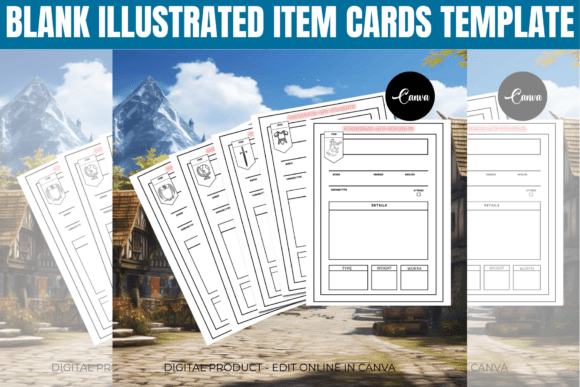
For dungeon masters and game designers, the difference between a good session and a memorable one often lies in the tangible details. A cryptic map, a weathered scroll, or a beautifully rendered magic item can anchor a player's imagination in your world. This is precisely where the Blank Illustrated Item Cards Template excels. It's not merely a collection of boxes; it's a professionally designed framework that marries the charm of hand-drawn fantasy art with the clean organization required for smooth gameplay. The template's visual personality strikes a perfect balance—it feels authentic to a medieval fantasy setting with its intricate borders and thematic icons, yet maintains a modern clarity that prevents visual clutter.
The style is intentionally versatile. Think of it as a premium design asset for your tabletop. The illustrated borders provide instant atmosphere, while the central space is deliberately clean, acting as a canvas for your own creativity. This structure supports excellent visual hierarchy, ensuring that the item name, description, and mechanical properties are immediately distinguishable. Whether you're a seasoned graphic designer crafting a bespoke campaign or a hobbyist looking to elevate your game night, the template offers a polished, professional starting point that saves hours of layout work.
Beyond the Game Table: Unexpected Applications
While designed for Dungeons & Dragons 5th Edition and other RPGs, the utility of these illustrated cards extends far beyond character inventories. Their strength lies in their adaptable format and evocative style, making them a surprisingly effective tool for various creative and professional projects.
- Brand Storytelling & Marketing: For brands in the fantasy, gaming, or literary space, these cards can be adapted into unique social media graphics, product tags, or promotional handouts. Imagine a craft brewery using them to describe a seasonal ale's "legendary" ingredients, or a bookstore creating collectible cards for featured novels.
- Publishing & Editorial Design: Authors and publishers can use the template to create companion materials for book releases—character artifact cards, spell component lists, or world-building supplements that enhance reader engagement and serve as memorable marketing pieces.
- Event & Wedding Planning: With a shift in color palette and typography, the elegant borders can frame table numbers, menu descriptions for a themed event, or activity cards for a fantasy-themed wedding, adding a layer of immersive detail.
- Educational Tools: Teachers and workshop facilitators can repurpose the cards as interactive flashcards for history lessons (artifacts of ancient civilizations), science (properties of elements), or creative writing prompts.
The key is recognizing the template as a flexible design system. The illustrated frame provides a strong, thematic foundation, while the editable interior allows the content to be completely transformed to suit your specific project's needs, whether it's for commercial use or personal passion.
Maximizing Impact: Practical Design Guidance
To get the most out of the Blank Illustrated Item Cards Template, a thoughtful approach to customization is essential. Here’s how to ensure your final product is both beautiful and functional.
Font Pairing and Typographic Hierarchy
The template likely comes with suggested typefaces, but its true power is unlocked through intentional font pairing. For the item name, consider a bold display font or a thematic serif font to establish importance and genre. The description body requires maximum readability; a clean sans serif font is often the safest choice for longer text blocks. If you want to inject personality, a script font or handwritten font can be used sparingly for specific keywords or a "flavor text" quote, but test its legibility at small sizes. The goal is a clear visual hierarchy that guides the eye from the most important information (the item name) to the details.
Testing and Readability Considerations
Always test your designs in their intended medium. Print a test card on the paper you plan to use. Check that the text is crisp and the colors are distinct. For digital sharing via platforms like Roll20 or Discord, view the card at the typical zoom level your players will use. Ensure contrast is sufficient and that any icons or small illustrations remain clear. This step is non-negotiable for maintaining professionalism and ensuring your handouts enhance, rather than hinder, the game.
Aligning with Project Goals
Evaluate the template against your project's core needs. Is the primary goal quick inventory management? Prioritize clear labeling and consistent formatting. Is it to create beautiful collector's items for players? Then focus on cohesive color schemes, custom illustrations, and elegant typography. The template's editable nature means it can serve both purposes, but your design decisions should align with the intended user experience. Remember, the most effective design is one that serves its function flawlessly while reinforcing the desired aesthetic—be it gritty realism, high fantasy, or whimsical adventure.
Ultimately, these cards are a powerful design asset